
You Belong Beyond The Break
I love the film Cast Away with Tom Hanks.
He plays a man called Chuck who is marooned on a desert island, and many of its scenes have stayed with me.
There’s the rotting tooth he knocks out with an ice skate. But the scene I can’t forget is the way he leaves the island.
I think a lot of men live like Chuck. We provide, we cope, we hold it all together and over the years it becomes an island. Unwittingly, we can cut ourselves off, from the people around us and from ourselves.
Mostly, I think, this comes down to a feeling or story about ourselves we can’t be with. Grief we never gave time for. Anger we thought would be too much for others. And moments of tenderness that we kept private for fear of being judged for it.
So, over the years we lay down layers and layers of resistance against the waves of life, until we have a nice little island, which we can guard and control.
Chuck, though, wants to get off his island. He is bored of coconuts and fish and feeling lonely. His best friend, Wilson, is a volleyball. It’s time to go home.
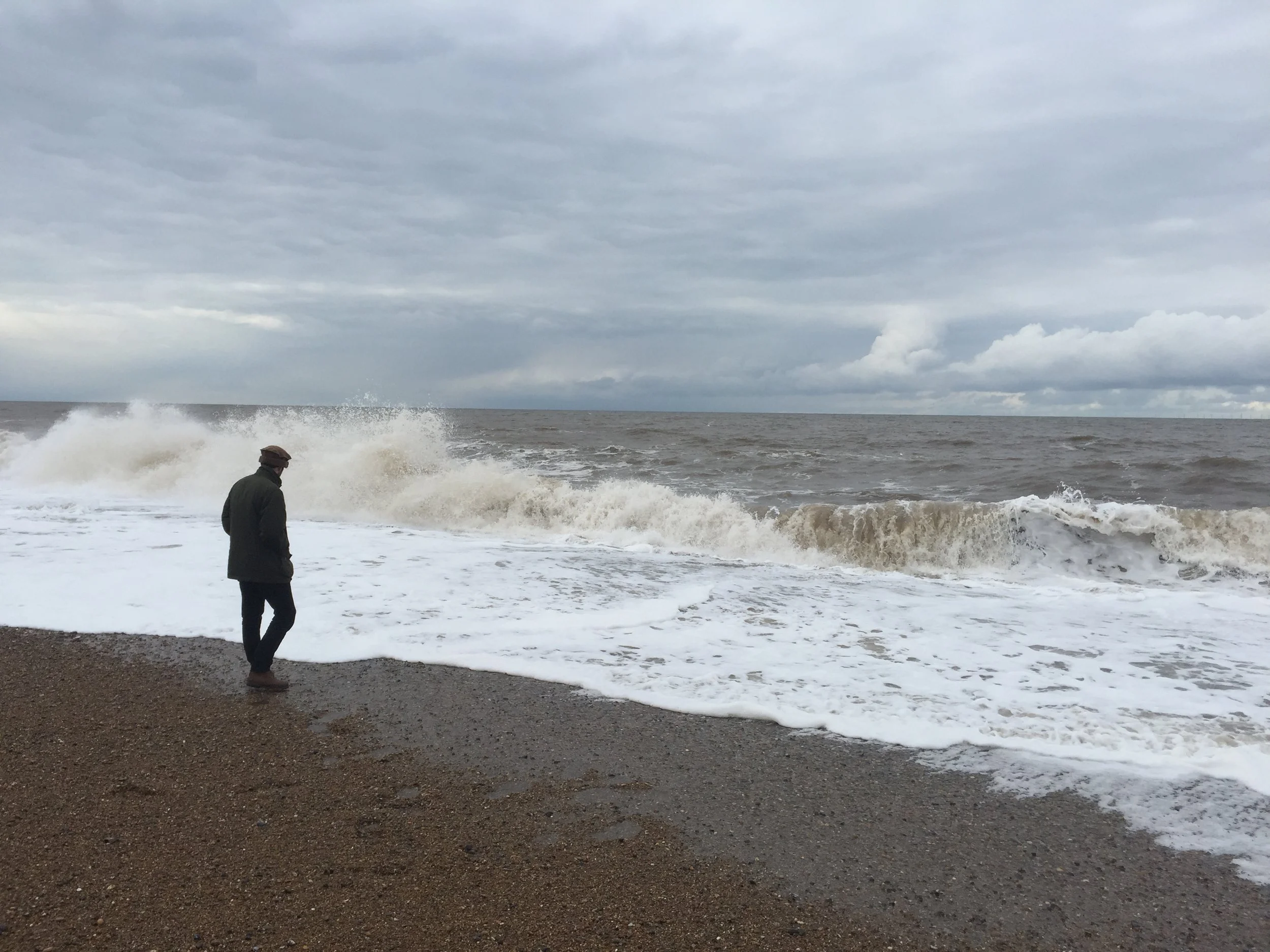
He builds a raft and rows out. But it’s dangerous; he’s got to get beyond the break, where the waves are biggest.
Waves are inevitable. Chuck has two sets to face: the surf in front of him, and the fear inside him. When we leave our comfort and head for its edge, both come with the territory.
However, meeting a wave side on would destine him to capsize. His dreams of freedom along with his raft would get smashed. So he points his raft straight at them. It’s the safest thing he can do, and it takes the most balls.
“Here we go, Wilson. You don’t have to worry about anything. I’ll do all the paddling. You just hang on.”
He’s talking to a volleyball, but he might just as well be talking to the frightened boy in himself. Leave it to me. I’ve got you. It’s the voice of kind reassurance every man needs in rough water, and most of us don’t give that to ourselves.
But paddling only gets him so far. We push harder, work harder, think harder and it takes us out, but at some point, it all just gets harder.
Letting go of the oars, in waves like these, feels crazy. But to get past the biggest ones, he has to let something bigger than his own effort move him. So he raises a sail.
Some might call that surrendering to a higher power. Call it whatever works for you. I’ll call it surrendering to our ache for a bigger life. It’s the sea in us, calling us out. The waves are part of it. They’re what the depth feels like from the surface.
Days later, out on open water, Wilson slips off the raft. Chuck goes after him until he can’t, and has to choose between the raft and the only friend he’s had for four years. He has to let go. Then he weeps, out loud, alone on the open sea. “I’m sorry Wilson!”
It’s the most heartbreaking moment in the film. The grief many of us never give time for finally gets its turn. Wilson kept him company on the island, but he can’t come into the next chapter.
It feels like the break will break us. It doesn’t. What breaks us, slowly, is our harbouring. Our turning away from the uncomfortable, back towards the familiar. Our controlling of our feelings instead of respecting them. Our allegiance to whatever kept us company on the island, but now only serves to maintain our isolation.
“No man is an island,” John Donne wrote. Most of us men have built one anyway.
Chuck shows us what’s possible. We can talk to the small boy within us who needs our reassurance. We can put down the oars, meet the waves head on, and raise a sail.
Getting beyond the break doesn’t end the weather, of course. Chuck still faces storms out there. He has to say goodbye to Wilson. But he’s in open water now. Life is moving through him. And he’s sailing.
For Chuck, his life depended on it. For us it does too, it’s just harder to see.
For most of us our basic needs are met. Society tells us we’re on track, or gives us misleading signals for what would get us back on ‘track’. And the men around us are often stuck on islands of their own, but telling everyone they’re living their best life. No wonder we can feel lonely.
It is only when we face the depths of vulnerability that our true possibility and potential can be known.
Whatever lonely shore you find you keep getting washed up on, it’s not your home, however familiar it has become.
Listen to your ache.
You belong beyond the break.
P.S. Here is the scene where he leaves the island, if you want to see and feel it for yourself.