
My Philosophy

Most of us grow into lives we did not consciously choose.
We inherit ways of thinking, striving and succeeding long before we ever question them. We could call this our default purpose.
Default purpose is formed by family, school, culture and the strategies we developed in order to belong. It keeps us safe, it helps us function and it earns approval. For a while, that is enough.
Many of us eventually recognise the cost of following a script that was never ours. Some respond by constructing a new one, created purpose. We redesign our life, choose new goals, new identities, more deliberate ambitions. This is an important step. But it still comes from the same personality structure that built the default one. It can only take us so far.
Soul purpose is different. It is not something we invent. It is something we uncover. It asks us to become more fully ourselves, not more impressive, not more secure, but more aligned with our deepest longings and gifts. It is sometimes called the pathless path, because it has never been walked before, by anyone, and it won't be walked the same way again.
So purpose tends to show up in three registers:
Default purpose is the life we inherit. It’s socially authored. It arrives as a must.
Created purpose is the life we design. It’s self authored. It arrives as a want.
Soul purpose is the life that reveals itself through us. It’s soul authored. It arrives as a longing.
Most of us move between all three throughout our lives. Sometimes within the same day.
This way of understanding purpose comes from my training with Jonathan Gustin and the Purpose Guides Institute.
We don't satisfy our longing by finding better direction. What changes things is depth.
If you're ignoring the deeper call of your soul, you're not suffering alone. We live in a culture that rewards fitting in over becoming ourselves, productivity over presence, having over being.
“If the path before you is clear, you’re probably on someone else’s”
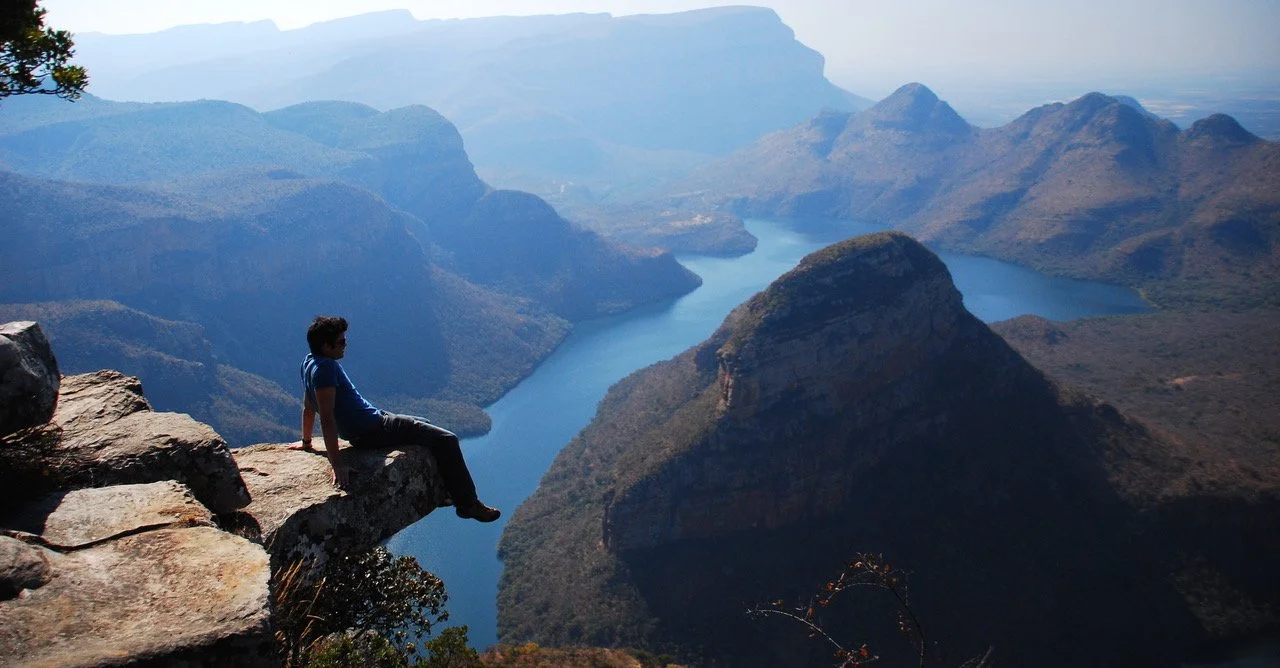
Why this is harder for men specifically
In a functioning village, no one would be left to work this out alone. You'd be recognised by elders or be guided by a deep relationship to land, rather than expected to author your own purpose from scratch. Most of us never received that. So we're left to discover it the hard way, and worse, men tend to absorb the idea that we should be able to do it easily, on our own, without help.
So, if you feel lost, it's not your fault. It's the water we're all swimming in. But it's also exactly why this work happens in a small group of other men, rather than alone in your own head.
As men, there's particular pressure to have it all figured out on our own, to have made the mark, to not be behind, to not be the one still finding his feet, to make ourselves relevant. Fall short of that and it's easy to slide into a cycle of fear, guilt and shame.
So often we present ourselves as ‘fine’ to others, even to ourselves. Life becomes a performance.
The fears that keep us hiding behind a mask of performance are the harbour's voice. It's very convincing, and it isn't lying to you about the risks. Leaving the harbour does cost something. It's not easy. But that same voice never mentions what staying costs too.
The harbour never goes away, we just learn to have more freedom with it.
It's no surprise so many of us men reach mid-life unsure who we really are. When we live disconnected from our own soul, we tend to live disconnected from the earth too. We can relate to life as something to extract from, rather than something to belong to.
The restlessness so many of us feel is easily seen as a personal failing. But it's a natural response to a culture that has made this kind of separation, from ourselves, each other and the living world, entirely normal.
Becoming yourself, in this culture, is a radical act, and it takes courage. The kind that comes from meeting yourself with curiosity instead of judgement, kindness instead of pressure. From that steadiness, courage tends to arrive on its own, and it tends to last.
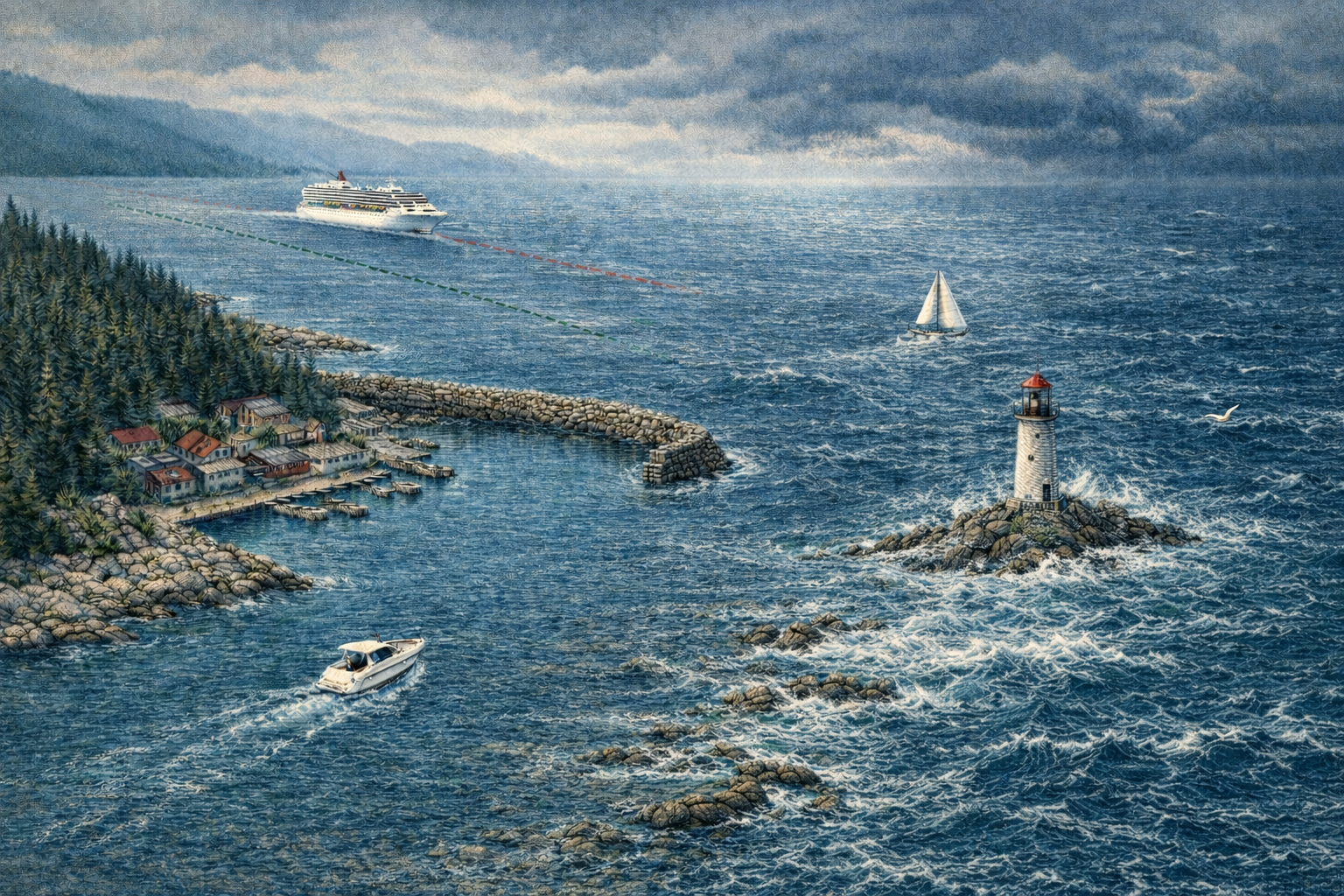
The Harbour and the Sea
To bring this to life, I use a guiding metaphor and it weaves in the three different types of purpose outlined above.
We are all hardwired to leave the harbour, to find purpose and belonging. Some of us travel the shipping lanes (default purpose). From a distance it can look like we're out at sea, but the routes are already mapped and the destinations already known. We are following someone else’s expectations and path.
For a while this works, and is necessary. But eventually something in us feels confined there, and we get tired of wearing masks and never tasting the salt in the water.
So we captain our own boat, a motor boat (created purpose). We start the engine and head out under our own power. Now we're choosing, steering, determined to build our own path. But the engine is loud and the fuel is costly, and the noise of trying can drown out the quieter voice of the sea.
We become exhausted and empty and something else begins to call us, a sailboat (soul purpose).
We hear the pull of open water. We hoist the sail and let ourselves be guided by winds and currents we didn't generate and couldn't have ever designed.
The journey isn't predictable. There are storms, dead calm, long stretches of uncertainty. But these are the very experiences that reveal who we actually are, and what we're here to give.
We are both following our joy and also listening to the wisdom of our pain.
Over time we return to the harbour with a twinkle in our eye, and gifts we now know are ours to share. And then, when the moment comes again, we find our edge of knowing and set sail once more.

Land and People as Medicine
This work rests on a simple understanding: nobody encounters their purpose in isolation. The harbour is often maintained by isolation.
We think we need more resources, when often what we need is closer relationship, with land, with good people, with the currents of life moving through us, and with the wisdom that arises from our felt experience.
Solitude in nature is fertile ground for meeting the soul. So is being the witness to and being witnessed by other people who are on this journey.
Land and people are medicine for each other.
If any of this resonates, and you’d like to explore further, I would recommend checking out my ‘Ways to Begin’ page.
What is the medicine that you are here to give?